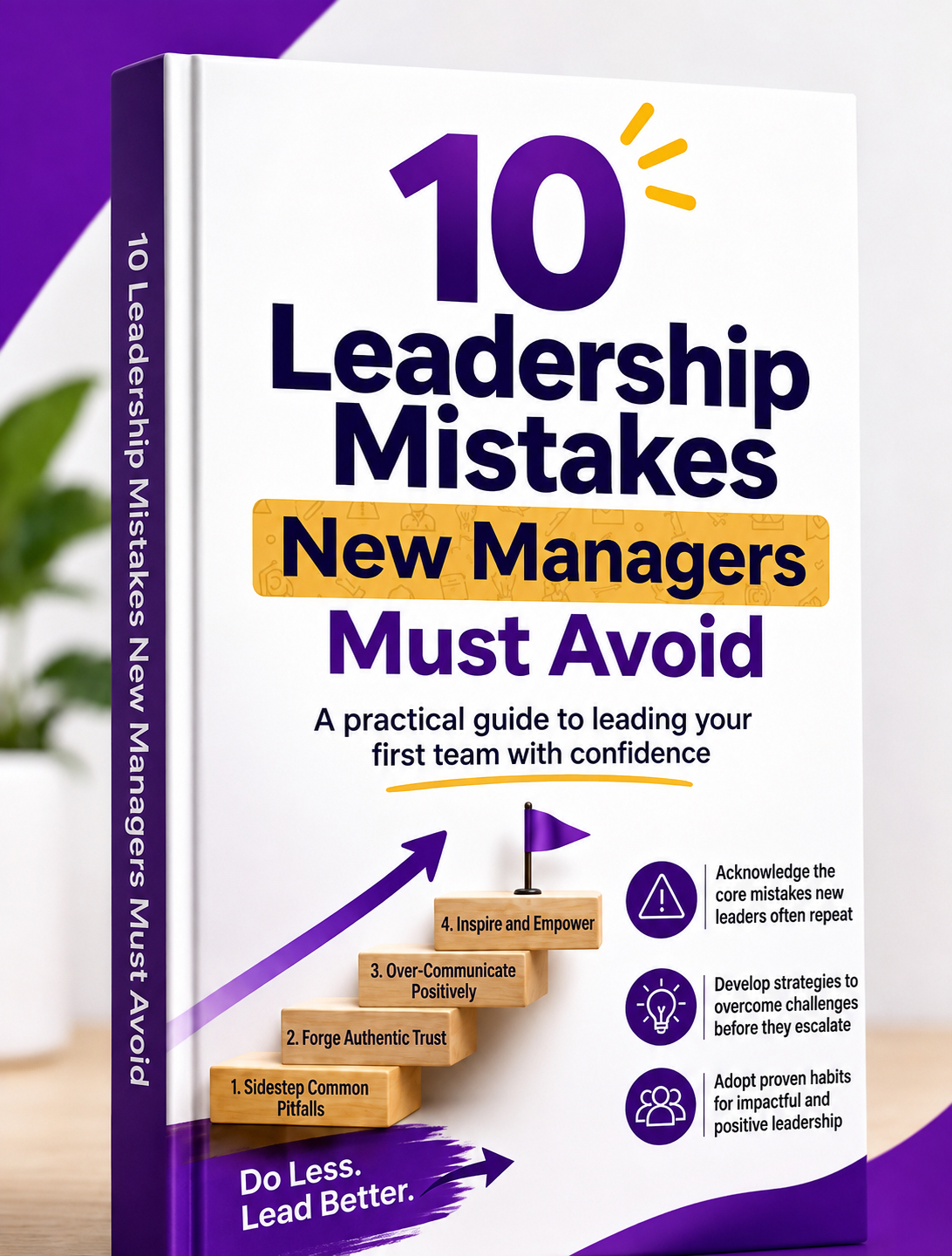
Stepping into a management role is often seen as the next logical milestone in a successful
career.
After consistently delivering results, solving complex problems, and becoming a trusted member
of the organisation, many professionals are promoted because they’ve proven they can perform.
But leading people is fundamentally different from doing the work yourself.
The skills that make someone an exceptional engineer, marketer, accountant, salesperson, or
analyst don’t automatically prepare them to manage people, resolve conflict, inspire
performance, or build a cohesive team.
This explains why many first-time managers experience an unexpected reality.
Projects Begin To Stall
The problem isn’t capability.
It’s that management requires a completely different set of competencies, ones that many
professionals have never been formally taught.
As businesses continue adapting to artificial intelligence, changing workforce expectations, and
more collaborative ways of working, organisations are placing greater value on managers who
can build strong, engaged, and high-performing teams
Table of Contents
ToggleLeading a team today is far more complex than it was a decade ago.
Employees expect more than instructions and supervision. They want clarity, meaningful
feedback, opportunities to develop professionally, and leaders who genuinely invest in their
success.
At the same time, organisations are expected to move faster, innovate continuously, and
respond quickly to changing customer demands. Hybrid work, digital collaboration, and AI-
powered workflows have transformed how teams communicate and execute their
responsibilities.
Managers now find themselves balancing multiple priorities at once.
They’re expected to achieve business objectives while maintaining morale, strengthening
collaboration, developing talent, and navigating constant change.
Without strong leadership, even highly skilled teams can struggle to perform consistently.
Building a high-performing team doesn’t begin with performance targets or productivity tools.
It begins with leadership.
People perform at their best when they understand what’s expected of them, trust the people
they work with, and believe their contributions matter.
New managers who successfully build strong teams tend to focus on a few essential practices:
These behaviours create an environment where people feel supported, trusted, and motivated
to contribute their best work.
Strong teams aren’t built through pressure.
They’re built through purposeful leadership
The transition from individual contributor to manager is one of the most significant career shifts
a professional can experience.
Many new managers unintentionally rely on the same habits that made them successful in their
previous roles.
Instead of leading through others, they continue trying to do everything themselves.
Some of the most common challenges include:
Individually, these habits may seem harmless.
Over time, however, they reduce trust, slow decision-making, limit employee confidence, and
prevent teams from reaching their full potential.
These challenges don’t indicate poor leadership potential.
They simply highlight the importance of learning how to lead people not just manage work.
One of the biggest misconceptions in the workplace is that outstanding performers naturally
become outstanding managers.
In reality, technical expertise and leadership excellence are two different capabilities.
An exceptional software developer may struggle to coach other developers.
A top-performing salesperson may find it difficult to delegate responsibilities.
A brilliant financial analyst may excel at solving problems but struggle to inspire collaboration
across a team.
Leadership requires a shift in perspective.
Instead of asking, “How can I complete this task?”
Managers begin asking, “How can I help my team succeed?”
That mindset changes how decisions are made, how conversations take place, and how
success is measured.
The most effective managers understand that their greatest contribution is no longer their
personal output.
It’s their ability to create an environment where others consistently perform at their best.
Every successful team has one thing in common: it doesn’t rely on chance.
High-performing teams are built through deliberate leadership, shared accountability, and a
culture that encourages continuous improvement.
Team members understand how their work contributes to broader organisational goals.
Communication is open, expectations are clear, and collaboration is encouraged rather than
forced.
More importantly, people feel safe enough to ask questions, share ideas, challenge
assumptions respectfully, and learn from mistakes without fear of blame.
This kind of environment doesn’t happen automatically.
It is created by managers who consistently demonstrate trust, fairness, and a genuine
commitment to helping their people succeed.
When employees feel supported, they become more willing to take ownership, solve problems
proactively, and contribute beyond the minimum requirements of their roles.
That’s what separates an average team from an exceptional one.
Organisations invest heavily in technology, automation, and operational efficiency because they
recognise the impact these investments have on business performance.
Leadership deserves the same level of attention.
A manager influences productivity, employee engagement, retention, innovation, and customer
experience. The quality of leadership often determines whether talented employees remain
committed or begin looking for opportunities elsewhere.
Poor management can result in unclear expectations, low morale, workplace conflict, and
declining performance.
Strong leadership creates the opposite effect.
Employees become more engaged.
Collaboration improves.
Decision-making becomes faster.
Teams adapt more effectively to change.
For organisations that want sustainable growth, developing capable managers is no longer
optional it’s a strategic investment.
Leadership is developed through intentional learning and consistent practice.
The most respected managers don’t assume they have all the answers. They remain curious,
seek feedback, and continuously refine how they lead.
New managers can strengthen their leadership by:
The transition into management shouldn’t be left to chance.
The First-Time Managers Program was created to help newly promoted managers,
supervisors, team leads, and aspiring leaders develop the confidence and practical skills
needed to succeed in today’s workplace.
Rather than focusing only on leadership theory, the programme combines practical workplace
scenarios, proven management frameworks, and actionable strategies that participants can
apply immediately.
Whether you’re leading a team for the first time or preparing for your next leadership
opportunity, the programme is designed to help you make that transition with confidence.
Throughout the programme, participants will gain practical knowledge on how to:
Every module is designed around real workplace challenges, ensuring participants leave with
skills they can apply immediately.
Every organisation needs managers who can inspire people, make sound decisions, build
resilient teams, and create environments where performance thrives.
The professionals who stand out over the next decade won’t simply be those with the strongest
technical expertise.
They’ll be the leaders who know how to bring out the best in others.
If you’re ready to strengthen your leadership skills and build teams that consistently perform at a
higher level, the First-Time Managers Program is designed to help you make that transition
successfully.
Register now and begin your leadership journey:
First-Time Managers Program – Nanoskilledhttps://nanoskilled.com/ftmp/

An employee performance improvement platform connecting corporate learning to measurable business results
14, Amara-Olu Street, Agindingbi, Lagos State.
See what’s included, how the programme works, and what your team can expect
Schedule a personalized walkthrough with one of our specialists